4th May (1918)

Did a picquet in the small still hours.  During the night Fritz dropped a string of heavy bombs.  Though bombs are no more dangerous than shells everyone hates them – they drop with a kind of menacing throb-b-b throb-b-b! and an unseen aeroplane, by some acoustic peculiarity, always sounds directly overhead.

Novel sight of dropping of propaganda balloons over Hun’s lines.  Bright blue in colour.  Don’t know by what arrangement they are regulated, probably clockwork.

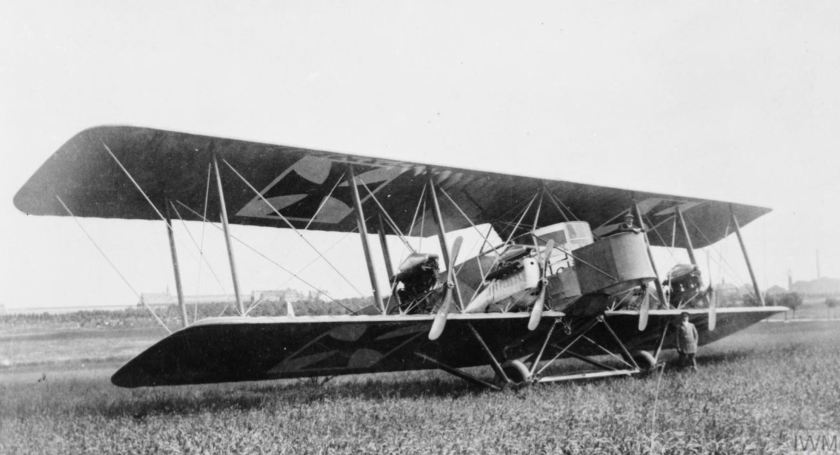
IMW (Q 66433) Siemens-Forsman four-engined heavy bomber

[Image: Siemens-Forsman four-engined heavy bomber. IMW (Q 66433)]

3rd May (1918)

Last night Jock, Bombardier Dawson and I carried on rather abstract discussion to a pretty late hour, to the obvious boredom of the two cow-spankers: “get to bed you bastards” they said “and to hell with your Hart and your littertoor”.

Large undulating fields are relieved with patches of brown earth, varying tones of young crops and occasional splashes of light yellow flowers – mustard I think.

A distant picturesque old windmill, peeping over the brow of the hill, swings his big arms slowly against the sky; church spires peep up from among the wooded villages and one begins to soak in somewhat the spirit of an ancient and famous country.

2nd May (1918)

Riding to water this morning, whiz, plunk, plunk! nose-caps from anti-aircraft shells smacked into the ground a few yards away.  Merriment in the horse-lines when one of the sergeants came crashing through the hedges leading a wild-looking horse drawing an enormous roller, used by the peasants for agricultural purposes, and with it rolled the now doughey mud into a state approaching consistency.  Supper last night a superlative mixture of rolled oats and custard concocted by Jock almost at the expense of his eyesight over a fire of bituminous painted boards.

Have been for a stroll with Jock, talking of pleasant things – of designing houses and building them and other pleasantries of the world we have left but not forgotten.  He, too, is married.

May Day (1 May 1918)

Cold, damp, and raw.  This morning entertained by an escaped charger; a large black horse, which in spasms of elephantine friskiness insisted upon accompanying us, punctuating his gallops with harried munching of young oats, whilst his distantly blaspheming driver brought up the rear.  He, the horse, would be pausing to crop the oats and apparently an easy prey, but out of the corner of his eye he had been noting his would-be captor, and just when the latter’s hopes were rising up, up went his heels and down went his head and “Quadrupedante putrem sonitu quatit ungula campum”.  Witnessed some rite of which I am ignorant.  An old priest, accompanied by a woman and young girl carrying a large box with a cloth covering, walking down the middle of the street monitoring all comers aside in an authoritative manner.  Perhaps something to do with May Day?

28th to 30th April (1918)

Trying to use those crayons.  I have done one little daub (or rub, or smidge, whichever is the word appropriate to chalk offensives) and am in the middle of a second.

Have lately been and felt gay almost to hilarity – don’t know the cause, other than good health and the approach of spring.  I even made a bad pun this morning before dawn while Jock and I were harnessing in semi-darkness – he got quite annoyed.

Great shells, coming from so far back that we could not distinguish the reports of the guns they came from, kept roaring overhead in salvos, sounding like railway trains.  There was, to me, the novel sight of many blue, bright and wonderfully swift swallows, swooping and skimming above in every direction.  Their wings and backs are a sleep electric blue, the under body from the wing-joints white, their long neatly-forked tails streaming behind.  They are the smartest birds I know.

My mules are now a pair of madcaps – the supercilious Rangatira and the “scatty” mule who dances a fandango all the time I’m grooming her – neither of them inclined to make chums either of me or each other.

Have just received from Jock’s hands a ‘dixie’ of tinned fruit and custard – we have also in reserve five or six eggs ready boiled.
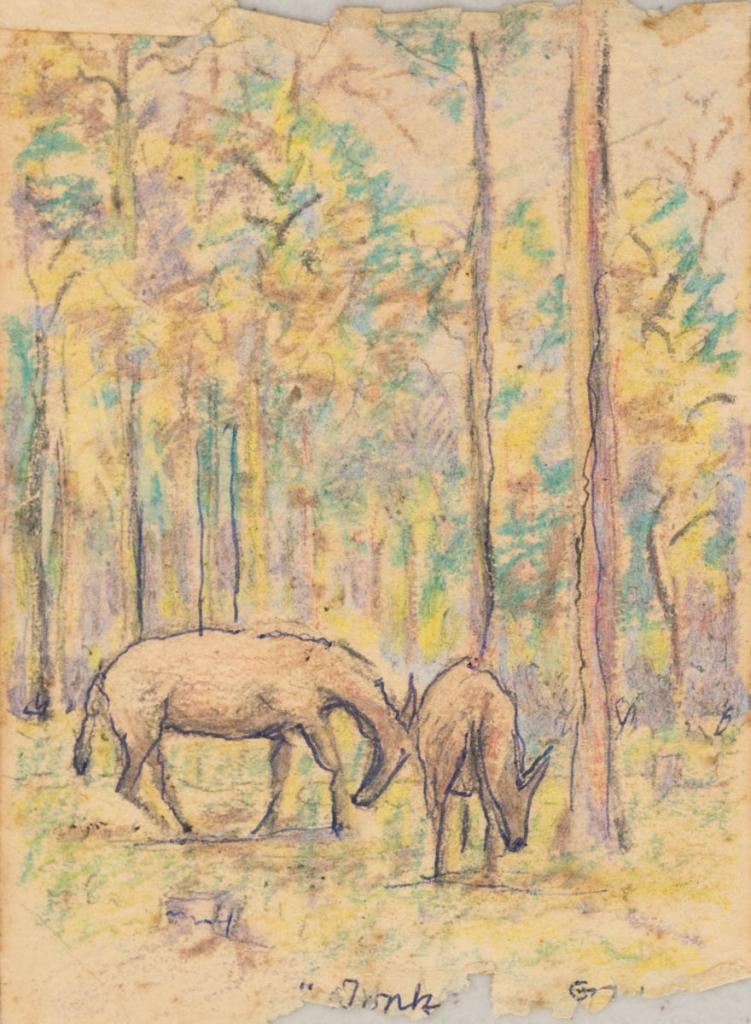
Lincoln Lee, Donks in Crayon, c1918

[Image: Sketch of “Donks” in crayon by Lincoln Lee, c1918]

27th April (1918)

We met with “outlaw” mules, which have either escaped or, more likely been surreptitiously released by their exasperated muleteers.  These roam unmolested by harness and humans, finding luxury in the young oat crops and clover patches, but when we troop by their gregarious instincts revive and they come trotting alongside and accompany us to water.  One, striped, obviously part Zebra, and quite unmanageable.  Here and there are colossal cherry trees in blossom.  The Froggys are funny about their water.  Every day there are “rumpuses”.  “Darby” white with rage and clenching his toothless jaws, a large stone clutched in his hand, threatened to bombard a Tommy caught in the act of “pinching” a bucket of liquid putrescence, from the stinking pond near their dung hill.  Tommy beat a retreat.  A woman was this morning making fuss over a notice being stuck in her field.  When the battery, subject of the notice, appears on the scene she will probably get St. Vitus’ Dance.  Her main blast was against a soldier squatting on a temporary latrine.  He sat on, looking her stolidly in the eye.  It was a treat on the other hand, to see something of the French troops, smart and efficient-looking.

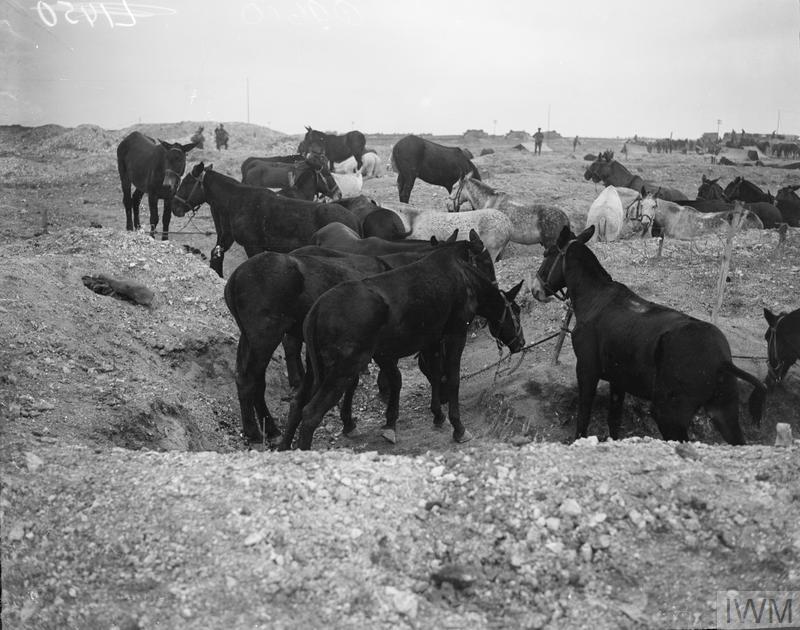
IWM (Q 9610) Mules tethered, Bellenglise, 4 October 1918

[Image: Mules tethered in the abandoned trenches of the Hindenburg Line near Bellenglise, 4 October 1918. IWM (Q 9610)]

25th April (1918)

Spent most of the morning burying my mule.  Salved a lot of material with which we are making the bivvy quite palatial. The episode of the Maori Officer – We saw him posed in Napoleonic attitude, sternly contemplating a tangled heap of wire.  He managed to maintain this attitude, regardant, until about half our cavalcade had passed, then gave in, pulled off his tin lid and staggered away, a very inebriated and muddy-backed Maori Officer. The N.C.O. who caught me when I capsized that wagon some months back was killed last night, poor chap, and buried this morning.  Even in ugly things like making a noise man cannot compete with nature, the loudest battery is not so appalling as a peal of thunder.

24th April (1918)

Carting lumber from a battered brewery in Mailly-Maillet.  The place is deserted save for soldiers.  A fine church has received some hard knocks, and most of the buildings bear signs of bombardment.  Today W. has left us to go to the O.T.C. in England.

My wounded mule is developing tetanus and must be shot.  I just now went to say good-bye to him but he gave me such a piteous glance that I had to beat a hurried retreat.  The murder of animals is one of the war’s worst features; a chance shell this afternoon killed and wounded about 20 horses not far from us.

Received from sister Myrtle a small parcel containing crayons and a little block.

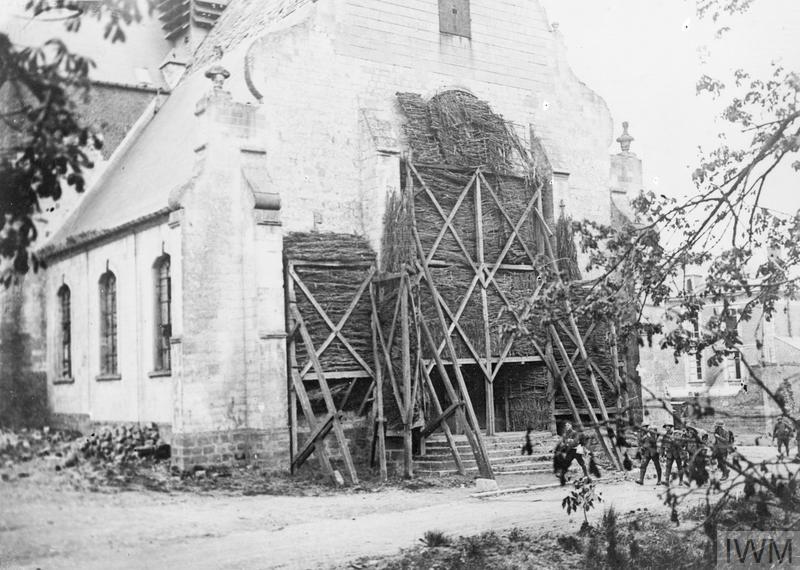
IWM (Q 60811) Entrance of the church at Mailly-Maillet, showing brushwood protection on stained glass windows, 29 April 1918

[Image: Entrance of the church at Mailly-Maillet, showing brushwood protection on stained glass windows, 29 April 1918.  IWM (Q 60811)]

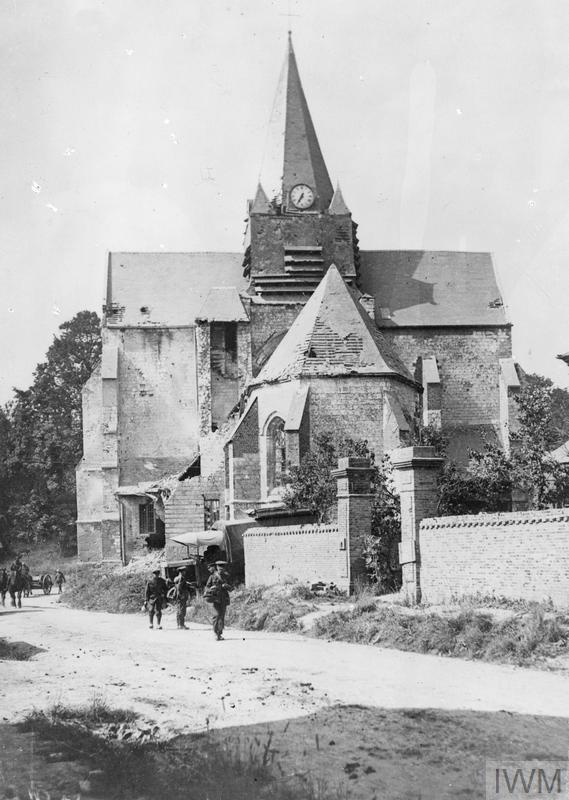
IWM (Q 60809) British troops passing by the church at Mailly-Maillet, 23 August 1918

[Image: British troops passing by the church at Mailly-Maillet, 23 August 1918.  IWM (Q 60809)]

Photograph – Lincoln Lee writing

In his 23 April 1918 entry just published, Lincoln Lee reflects on how diary-writing serves as a kind of consolation or comfort in a time of great distress:  “A man has in a way gained something when merely to be dry has become a luxury.  All is a matter of comparison, after all, and the fellows who find respite in cognac or “two up” are attending the same end as the superior individual who seeks solace in Shelley and keeping a crazy diary.”

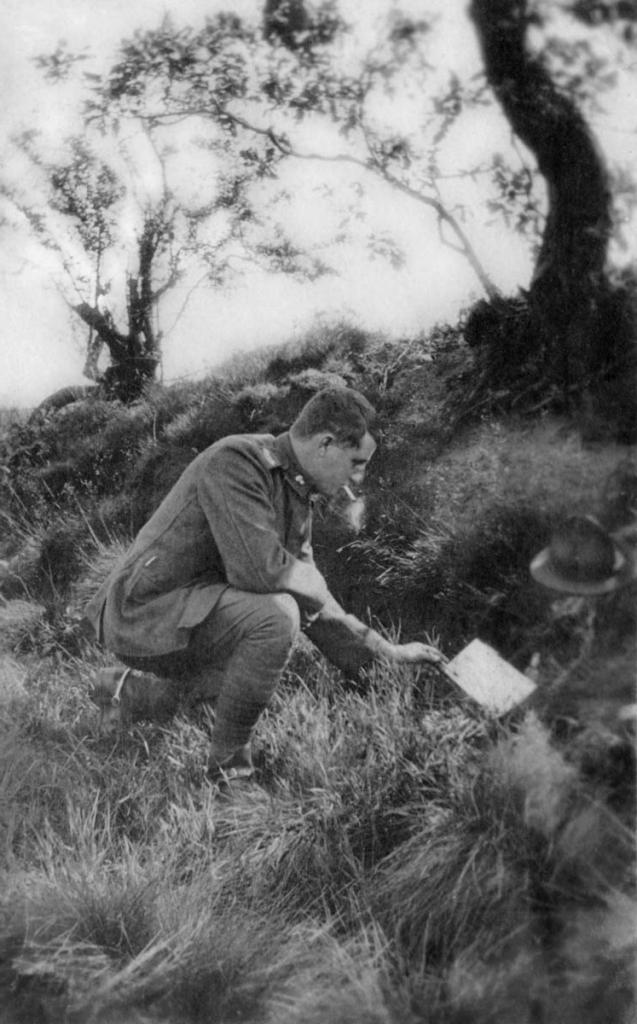
To depart from the diary format of this blog, the photograph below is held by Lincoln’s descendants, and shows him either writing or sketching, with a grassy bank behind him and a cigarette in his mouth.  The photograph is not dated and digital restoration work has been done on it by Pixelfix.  Lincoln’s uniform appears well pressed, so it is possible it was taken while he was in England in 1917, before deployment to the front.  It seemed appropriate to post it here.

Lincoln Lee writing or sketching, nd.

23rd April (1918)

My songster has been performing and continuing throughout the forenoon, but somehow the glare of day distracts from his charm.  He hadn’t sufficient reserve – not like our native wren who gives you just enough to make you long for more.

A shell whistles overhead every little while and crashes into some ill-starred village, but even the old French peasants have abandoned interest in such occurrences.  The peasant women are very sturdy and a soldier who carried a refugee woman’s bundle for a mile or so, said that he was glad to put it down and resume his pack and rifle.  Fritz is now potshotting at a balloon, failing to hit either it or to silence the skylark now making melody above me.

8 p.m.  The distant fire of large guns is very like the sound of an empty iron tank being beaten or rolled over a hard surface; that of the shells that burst in our terrain, like deep coughing of consumptive leviathans.  A man has in a way gained something when merely to be dry has become a luxury.  All is a matter of comparison, after all, and the fellows who find respite in cognac or “two up” are attending the same end as the superior individual who seeks solace in Shelley and keeping a crazy diary.

A few days ago my wrist watch stopped.  Yesterday I was preparing to pack it up when – it went.  The poor brute is obviously dirty and I can’t get it cleaned.  He’s too small to groom.

1-2 013140-G NZ soldiers gathering shellcases, Bus-les-Artois 20 April 1918

[Image: A party of New Zealand soldiers gathers salvaged shellcases and loads them for transport to the bases at the rear of the lines. Photograph taken Bus-les-Artois 20 April 1918 by Henry Armytage Sanders.  Turnbull Library, Wellington.  Ref: 1/2-013140-G]